Back to All Projects
PROJECT 001Mechanical EngineeringField Testing

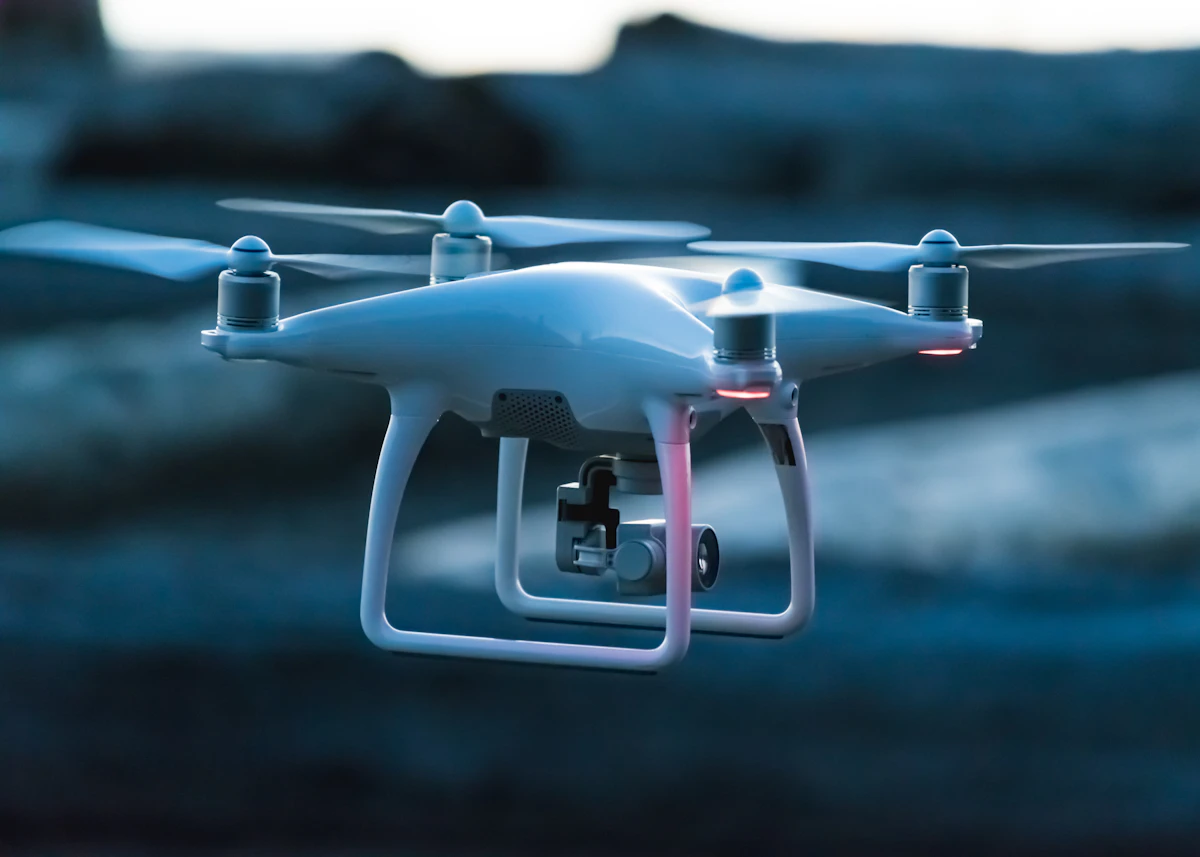
Autonomous Agricultural Drone

Multispectral crop health monitoring & precision spraying hexacopter tailored for Ethiopia agricultural landscapes.

Autonomous Agricultural Drone

Engineering Specifications

Flight Time28 mins (with 5kg payload)
Max Speed65 km/h
Sensor PayloadNDVI Multispectral + 4K RGB + 2D LiDAR
Telemetry Range12 km LoRa + 5.8 GHz Digital Link
Lead:Eyob Fentahun
Partner:Agricultural Innovation
Timeline:2026-09-25 (Active)

Technologies & Tools

PX4 AutopilotROS 2PythonOpenCVSolidWorksCarbon FiberLiDARLoRa
Current Status Overview

Phase 3 testing underway. Currently validating autonomous obstacle detection with 360-degree LiDAR and testing spray droplet dispersion uniformity under turbulent wind conditions.

The Problem Statement

Smallholder and commercial farms in Ethiopia struggle with early pest detection and localized fertilizer application. Traditional manual inspection over large hectarages is labor-intensive, slow, and delays critical crop treatments.

Our Zuhura Engineering Solution

We engineered an autonomous hexacopter equipped with a dual NDVI multispectral sensor payload and a precision ultrasonic-guided variable-rate nozzle system. The drone autonomously calculates optimal flight grids and transmits real-time vegetation health indices.

Design & Engineering Details

Constructed with lightweight carbon-fiber composite arms and custom 3D-printed PETG dampening brackets to minimize high-frequency motor vibrations. The propulsion system delivers 18kg thrust with 24-inch carbon propellers. Flight avionics are powered by Pixhawk 6C running PX4 autopilot linked to a companion Raspberry Pi 5 running edge computer vision.

Photo & Media Documentation

Field calibration before autonomous waypoint mission
Hexacopter assembly with carbon fiber arms
Bench testing motor thrust and thermal dissipation

Testing & Empirical Results

Conducted over 45 flight test hours across Bishoftu and field testing grounds. Achieved 28 minutes of continuous hover time with full 5kg payload. NDVI indexing achieved 94% correlation with manual agronomic field sampling.

Challenges & Failures Encountered

In true engineering, failure analysis is our greatest teacher.

In Flight Test #4, high thermal dissipation near the power distribution board caused an unexpected ESC desync during rapid yaw maneuvers, resulting in a hard landing. We completely redesigned the internal airflow cowling, replaced copper trace thicknesses, and integrated dual redundant ESC telemetry.

Future Roadmaps & Scaling

Integrating solar-assisted autonomous docking stations, expanding crop classification algorithms using specialized deep learning models, and collaborating with local agricultural institutes for commercial field pilot deployments.
Engineers on this Project
Eyob FentahunMechanical
Project Leader and Mechanical design
Want to contribute to this project pod?
Apply to Join Team